
The right treatment for a sun-damaged face depends on what the damage actually is. Brown flat spots, fine lines, rough scaly patches and uneven tone all come from years of UV exposure, but they are treated differently, and some patches need a doctor's opinion before any cosmetic treatment. In practice, the best results come from daily sunscreen, a prescription-strength or clinic-grade skincare routine, and targeted procedures chosen after a proper assessment.
This guide explains what sun damage looks like, which treatments have evidence behind them, what recovery involves, and how to avoid making pigmentation worse.
TL;DR
- Get any new, changing, scaly, bleeding or non-healing mark checked by a GP or dermatologist before you book a cosmetic treatment.
- Daily SPF 30 or higher with 4 to 5 star UVA protection is the most effective single step, for treatment and prevention.
- Retinoids work but slowly: expect months, not weeks, and some temporary dryness and redness.
- Lasers, peels and microneedling trigger controlled skin healing, so strict sun avoidance afterwards matters, particularly on darker skin tones.
- A consultation-led plan that combines home care with periodic in-clinic treatments gives the most reliable, natural-looking result.
Table of Contents
- What sun damage on the face actually is
- See a doctor first if a mark is not simply a brown spot
- Medical treatments for scaly, sun-damaged patches
- Cosmetic options for spots, tone and texture
- Regenerative treatments for skin quality
- Which treatment suits which concern
- How long recovery takes and how to protect results
- Our perspective on treating sun damage
- Treatment planning at NEXGEN Clinic
- Frequently asked questions
- Sources
What sun damage on the face actually is
Ultraviolet light changes skin over decades. The NHS explains that UVA protection is aimed at long-term photoageing such as wrinkles, leathery skin and brown spots, while UVB protection targets sunburn and skin cancer risk. You can burn in the UK, even when it is cloudy, so damage is not limited to holidays.
On the face, sun damage usually shows up in a few forms:
- Solar lentigines (sun spots or age spots): flat brown marks, usually on the cheeks, temples and forehead.
- Fine lines, roughness and dullness: the textural side of photoageing.
- Uneven tone and redness: often with visible small vessels.
- Actinic (solar) keratoses: dry, scaly patches. The NHS describes them as areas of sun-damaged skin that are not usually serious but carry a small chance of becoming skin cancer.
The first three are mainly cosmetic concerns. The last is a medical one, and that distinction decides everything that follows.
See a doctor first if a mark is not simply a brown spot
Solar lentigines are benign and, according to DermNet, do not need treatment unless you want it for cosmetic reasons. But because they signal long-term UV exposure, the British Association of Dermatologists' guidance is that the skin around them deserves a proper look, since more concerning lesions such as lentigo maligna can resemble an ordinary age spot.
Book a GP or dermatology appointment, rather than a cosmetic treatment, if a mark:
- is new, or has changed in size, shape or colour
- has uneven colour or an irregular border
- is raised, crusted, scaly, itchy or bleeding
- does not heal within a few weeks
The British Association of Dermatologists has a patient leaflet on actinic keratoses that lists where they typically appear: forearms, backs of hands, face, ears and unprotected scalp.
At our clinic, every treatment begins with an individual assessment. If we see something that looks like it needs medical diagnosis, we will say so plainly and advise you to see your GP or a dermatologist rather than treating it cosmetically.
Medical treatments for scaly, sun-damaged patches
For actinic keratoses, the NHS lists cryotherapy (freezing), curettage, photodynamic therapy and prescription creams such as fluorouracil or imiquimod. These are prescribed and supervised by doctors, usually through your GP or a dermatology department.
The key distinction is between two approaches:
| Approach | What it treats | Typical examples | Recovery pattern |
|---|---|---|---|
| Lesion-directed | Individual visible patches | Cryotherapy, curettage | Quick, localised healing |
| Field treatment | The wider area where invisible damage may sit | Fluorouracil or imiquimod cream, photodynamic therapy | Several weeks of active redness and irritation |
This matters for expectations. Destroying one spot does not change the surrounding photodamaged skin, which is why new patches often appear nearby over time. The NHS Cambridge University Hospitals leaflet on fluorouracil cream for solar keratoses is a useful example of what a field treatment course involves. NICE has also reviewed photodynamic therapy for premalignant and non-melanoma skin lesions and found no major safety concerns in the current evidence.
These are not treatments we prescribe for keratoses. We do offer skin lesion removal as part of our service list, and our assessment helps you decide whether a lesion should go through a medical pathway first.
Cosmetic options for spots, tone and texture
Once a doctor or experienced clinician has confirmed that what you see is cosmetic photoageing, there are several routes.
Daily sunscreen
It is not glamorous, but it is the foundation. The NHS advises SPF 30 or higher with 4 to 5 star UVA protection, applied generously (about a teaspoon for face and neck) 15 to 30 minutes before going out and reapplied every two hours when exposed. Without this habit, spots return and treatment results fade faster.
If you are unsure which type to choose, our guide to mineral versus chemical SPF 30+ sunscreen walks through the differences. For darker skin tones, this guide to SPF 30+ and first aid for dark marks also explains why sun protection matters after any skin injury.
Topical retinoids
DermNet reports that topical retinoids improve the appearance of photodamaged skin and need long-term use, beyond six months, to reduce solar lentigines and fine wrinkles. Redness, scaling and dryness are common early on. This is why a gradual introduction is sensible, and why a damaged skin barrier should be settled first. Our 2 to 4 week skin barrier repair plan is a good starting point if your skin is already sensitive.
Brightening ingredients
Azelaic acid, niacinamide, vitamin C and gentle exfoliating acids are commonly used for uneven tone. We compare two of them in azelaic acid versus niacinamide for UK skin. They are supportive rather than dramatic, and they work best alongside sunscreen.
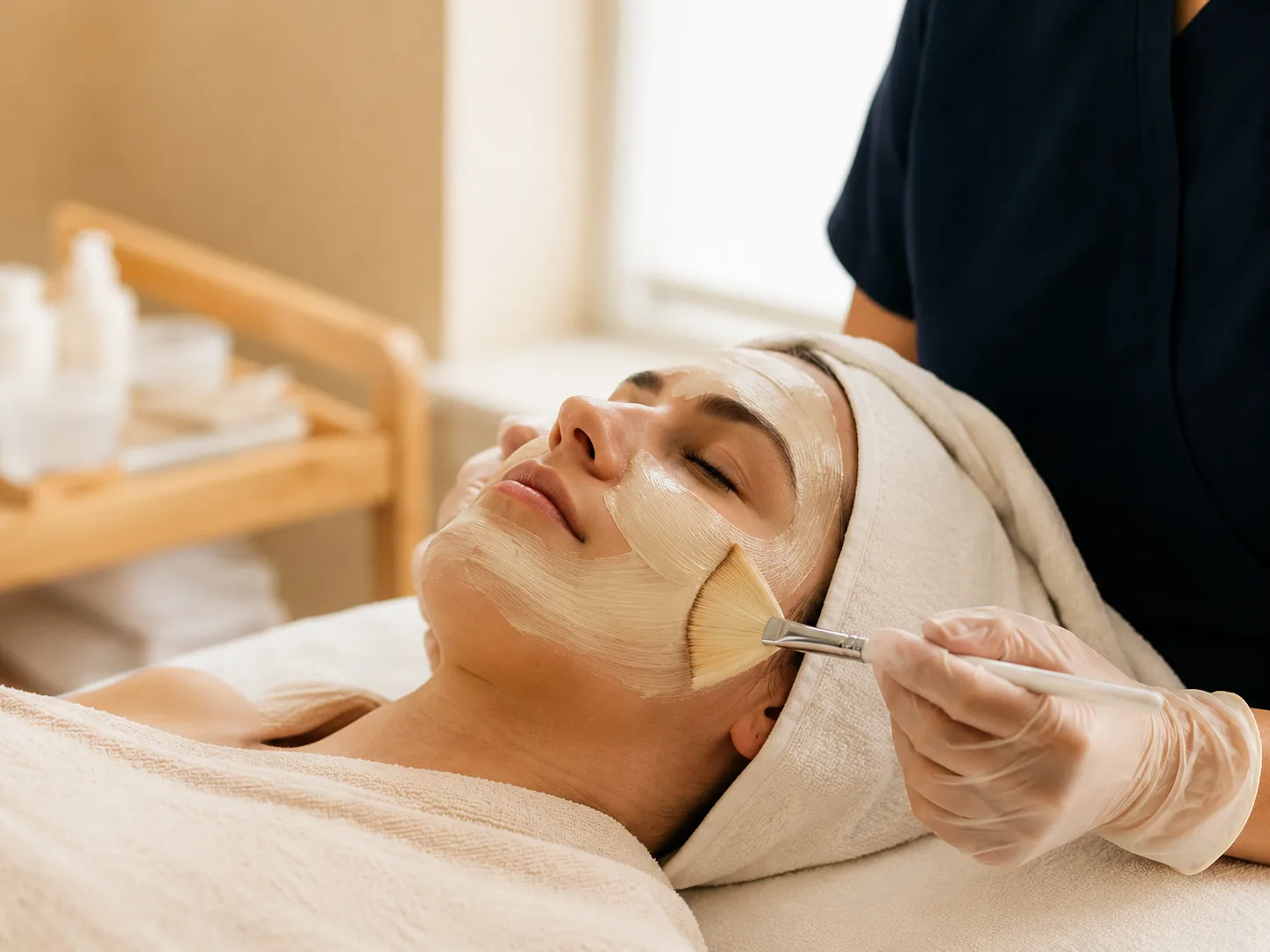
Chemical peels and advanced facials
Peels remove the damaged outer layers to improve tone and texture. A clinic-led facial such as HydraFacial can improve dullness and hydration with no real downtime. Neither will erase deep pigmentation in one session, and a sensible plan involves a series.
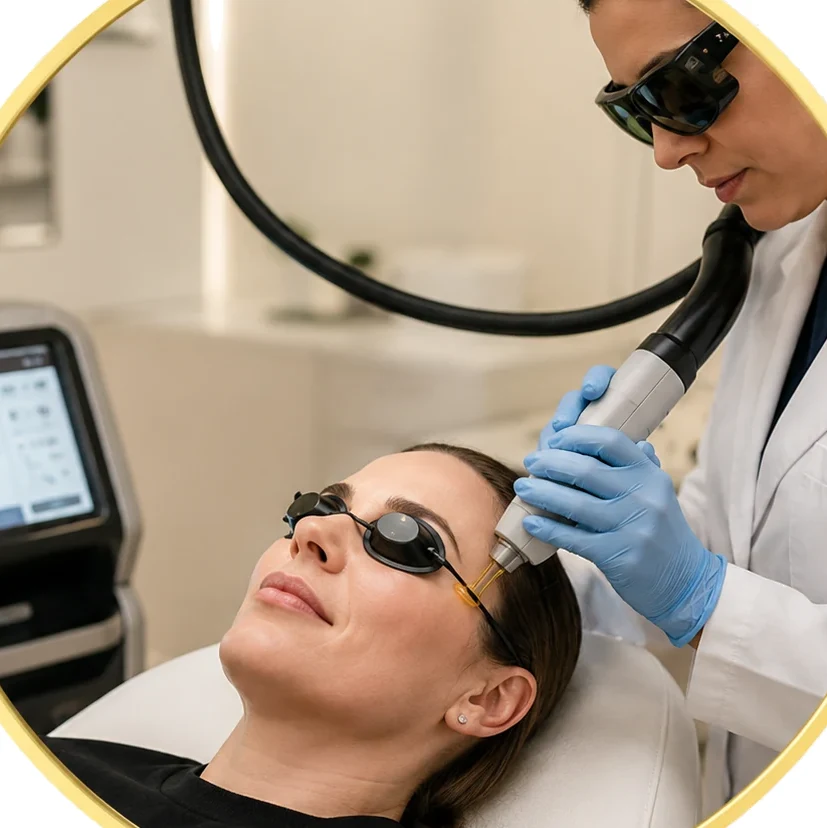
Lasers and light-based treatments
Lasers can target pigment or resurface skin. They also create a controlled injury, and DermNet's overview of topical treatment of photodamage notes the need for sun protection during recovery. This is where device choice and practitioner skill matter most, particularly on darker skin. Our article on laser on dark skin in the UK explains why 1064 nm wavelengths need an expert, and clinician matters more than device makes a similar point. If redness or visible vessels are part of your concern, see laser for broken capillaries.
Microneedling
Microneedling stimulates the skin's repair response to improve texture. A systematic review of 85 articles on its safety found that the most commonly reported adverse events were transient, expected after the procedure, and lasted up to seven days, such as redness, swelling and pain. Post-inflammatory pigmentation can follow, which is why aftercare and sun avoidance matter.
Regenerative treatments for skin quality
Sun damage is not only pigment. Years of UV leave skin thinner, drier and less elastic. This is where regenerative treatments are used to support skin quality alongside the steps above:
- Polynucleotides: injectable treatments aimed at improving skin quality and hydration. From £180 per session.
- Profhilo: a skin booster used to improve hydration and skin quality. From £250 per session.
- Skin boosters and microneedling: used within personalised rejuvenation programmes.
To be clear, these do not remove brown spots and are not a treatment for actinic keratoses. They are for the tired, dehydrated, crepey look that often accompanies photoageing. We would normally recommend dealing with pigment and any medical concerns first, then building skin quality on a healthier base.
Fine lines caused by repeated expression are a separate matter; our frown lines treatment guide and anti-wrinkle injections page cover those, and the neck lines guide helps if the damage extends below the jaw.
Which treatment suits which concern
| Concern | Sensible first step | Possible next step in clinic |
|---|---|---|
| Flat brown spots | Sunscreen, brightening skincare, mole and lesion check | Peels or laser, chosen for your skin tone |
| Rough, scaly patch | GP or dermatologist | Medical treatment as advised |
| Fine lines and roughness | Retinoid and sunscreen | Microneedling, polynucleotides or skin boosters |
| Dull, dehydrated skin | Barrier care, SPF | HydraFacial, Profhilo |
| Redness, visible vessels | Gentle routine, SPF | Laser assessment |
How long recovery takes and how to protect results
Recovery depends on the treatment. Facials involve almost none. Microneedling usually settles within days, in line with the review above. Laser resurfacing and stronger peels can take longer: DermNet's background on photodamage treatment suggests that healing and strict sun avoidance can run from one to four weeks.
If you skip protection during this window, you risk post-inflammatory hyperpigmentation, where the skin responds to injury by producing extra pigment. It is more likely on darker skin types.
Whatever you choose:
- Wear SPF 30 or higher with 4 to 5 star UVA protection every day, including in winter.
- Avoid direct sun, sunbeds and tanning in the weeks around any procedure.
- Follow the aftercare you are given and do not pick or peel treated skin.
- Plan treatments for months with lower UV where you can, and avoid booking just before a holiday.
- Return for review rather than repeating products or treatments on your own.
Our perspective on treating sun damage
Most people who come to us about sun damage ask for one treatment by name. What they usually need is a plan. With over 15 years of experience in aesthetics, we have learned that the order of steps matters more than the device.
We start by looking at the skin and asking what concerns you. We separate what is cosmetic from what should be seen by a doctor. Then we consider your skin tone, your sun habits and how much downtime you can accept. For many people that means a simple routine and one or two well-chosen procedures, not a long list.
We will also tell you when a treatment is not right for you, or when waiting is the better choice. Natural-looking improvement, without unnecessary treatment, is the aim.
— Ms Sandra Petraskaite
Treatment planning at NEXGEN Clinic
Our Cambridge clinic offers medically led facial treatments including skin boosters, Profhilo, polynucleotides, microneedling, HydraFacial, laser treatments and skin lesion removal, along with professional-grade skincare. You can see everything on our treatments page, and our policies and procedures explain how we work. Book a consultation and we will assess your skin, discuss options honestly and recommend only what is useful.
Frequently asked questions
What is the best treatment for sun spots on the face?
There is no single best option. Sunscreen, brightening skincare and retinoids are the base, and peels or lasers can be added for stubborn spots. Always have a new or changing mark checked by a doctor first, as it may not be a harmless spot.
How long does it take for skin to recover from sun damage?
The visible effects of years of exposure do not reverse quickly. Retinoids need to be used for more than six months for the best effect, and in-clinic procedures usually need a series. After a procedure, expect days for microneedling and up to a few weeks of careful sun protection for stronger treatments.
What is the best cream for sun-damaged skin?
A broad-spectrum SPF 30 or higher with 4 to 5 star UVA protection, used daily, is the essential product. A retinoid is the best-evidenced cream for photoageing, and vitamin C, azelaic acid or niacinamide can support tone. If you have scaly patches, ask your GP about prescription creams instead.
Are brown spots on the skin dangerous?
Most flat brown spots from the sun are benign solar lentigines. However, a spot that changes, has irregular colour, bleeds or does not heal should be examined by a GP or dermatologist promptly.
Sources
- NHS: Sunscreen and sun safety
- NHS: Actinic keratoses
- DermNet: Solar lentigo
- British Association of Dermatologists: Actinic keratoses
- Cambridge University Hospitals: Fluorouracil cream for solar keratoses
- NICE: Photodynamic therapy for non-melanoma skin tumours
- DermNet: Topical retinoids
- DermNet: Topical treatment of photodamage
- PubMed: Safety profile for microneedling, a systematic review
Recommended
- SPF 30+ Sunscreen: NHS‑Backed Mineral or Chemical Advice
- Glass Skin Facial: AI Assessment Beyond the Instant Glow
- Daily Sunscreen First: UK Neck Line Treatments Compared
- Frown Lines (11 Lines) Treatment Guide
Ready to explore your options?
Speak with a NexGen clinician for a personalised consultation. We’ll listen, assess, and recommend the safest and most effective route — always led by evidence, always tailored to you.
Book a consultation or get in touch with our Cambridge team.