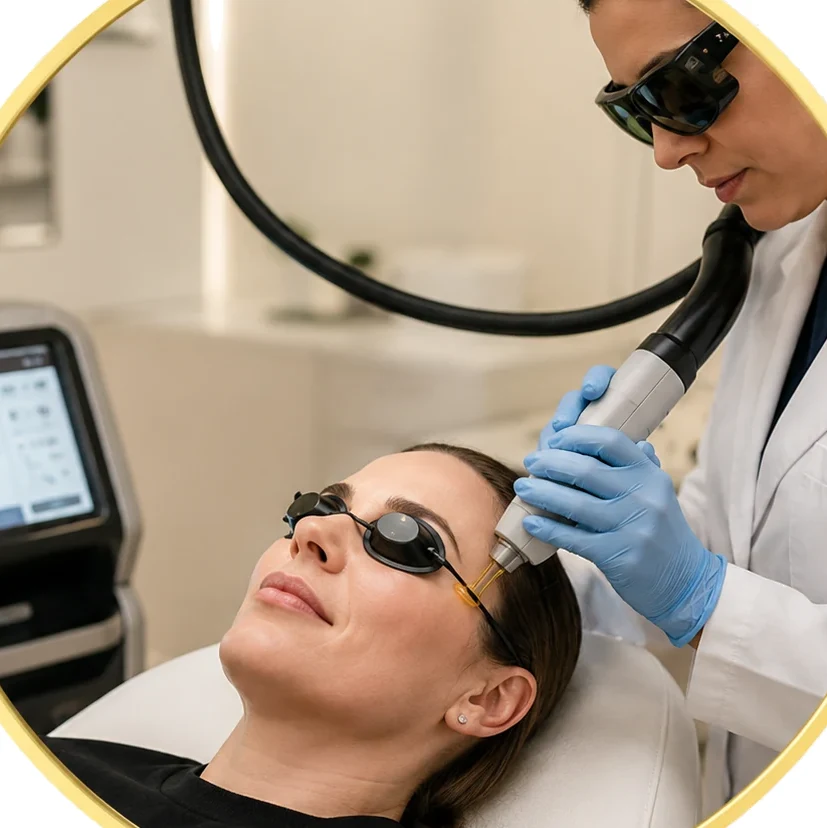

Laser can lighten or clear freckles. It works by targeting the melanin in each spot, and most people need more than one session. Results vary with your skin tone, the type of pigment and how well you protect your skin from the sun afterwards. Freckles are benign, so removal is a cosmetic choice. Whether laser suits you depends on a proper assessment first, because not every brown mark is a freckle.
This guide covers how the treatment works, what the evidence says, the risks, what you can expect to pay, and how to prepare and recover. If you would like a personal opinion, you can book a consultation with our team in Cambridge.
TL;DR
- Laser can clear or noticeably lighten freckles. In one prospective study of a 730 nm picosecond laser, average clearance was about 74%, and results differ from person to person.
- Expect a course of sessions, not a single visit. Temporary frosting, redness and bruising are common.
- Tanned skin cannot be treated safely, and daily SPF 50 afterwards is essential.
- Darker skin tones carry a higher risk of pigment changes and need an experienced operator and a test patch.
- Any new, changing or irregular mark should be examined by a doctor before anyone treats it with a laser.
Table of Contents
- How laser removes freckles
- What the evidence says about results
- Is it safe? Risks and who needs extra care
- How many sessions and how long to recover
- What does laser freckle removal cost in the UK?
- Preparing for treatment
- Aftercare that protects the result
- Laser compared with other options
- Our perspective
- Laser treatments at NEXGEN Clinic
- How to choose a practitioner
- FAQ
- Sources
How laser removes freckles
Freckles are small flat patches of extra melanin, the skin's natural tanning pigment. NHS patient information describes pigmented marks as caused by an excess of melanin, and that is exactly what a pigment laser aims at.
The laser delivers very short pulses of light that the melanin absorbs. The pigment is broken into fragments, and the body clears them over the following days and weeks. The surrounding skin is meant to be left largely undisturbed, which is why the choice of wavelength, pulse length and settings matters so much.
Different devices are used for pigment, including picosecond and Q-switched lasers and intense pulsed light. The device is only part of the picture. The operator's judgement on your skin type, the settings and the number of sessions has a larger effect on safety than the brand name on the machine. We explain the same principle in our guide to why clinician skill matters more than the device.
What the evidence says about results
The best-known recent data comes from a prospective study of a 730 nm picosecond laser for freckles. It reported an average clearance rate of around 74%, with about 54% of participants achieving an 'excellent' response, defined as 75 to 94% lightening.
Read those figures carefully:
- They are averages. Some people did better, some worse.
- The study was on a specific laser under study conditions, so a different device or settings may not give the same result.
- A split-face trial in Asian patients compared 730 nm and 755 nm picosecond lasers, which shows that wavelength choice is still an active research question.
NHS laser services say much the same in plain language: the response to laser treatment is very variable and the exact outcome is hard to predict for any one patient. A trustworthy clinic will not promise you complete removal.
Is it safe? Risks and who needs extra care
Laser for pigment is generally safe in trained hands, but it is a medical procedure with real risks. Healthline's overview of freckle treatments lists possible side effects including purpura (bruising), blisters, crusting, pain, hypopigmentation, hyperpigmentation and, rarely, scarring.
Pigment changes
Post-inflammatory hyperpigmentation (darkening) and hypopigmentation (lightening) are the main concerns. NHS information notes that these risks are higher in darker skin, and cites a study in Asian patients where hyperpigmentation was reported at 4.8% and blistering at 6.5% with newer picosecond technology. The same document refers to rates as high as 25% with older Q-switched lasers.
If you have brown or black skin, the wavelength you choose matters a great deal. Read our article on laser on dark skin and why 1064 nm needs an expert before you book anywhere.
Not every dark mark is a freckle
Freckles, sun spots (solar lentigines), melasma and some skin cancers can look alike to the untrained eye. Melasma in particular responds differently: the British Association of Dermatologists lists laser among several options but describes melasma as a condition with its own treatment approach, and lasers can sometimes make it worse.
See your GP or a dermatologist before treatment if a mark:
- is new, or has appeared in adulthood on one side only
- is changing in size, shape or colour
- has an uneven edge or more than one shade
- itches, bleeds or crusts
A laser should never be used to 'try' a suspicious mark. That is why every treatment at our clinic begins with an individual assessment, and why we also offer skin lesion removal for marks that need a different approach.
How many sessions and how long to recover
Many people hope for one visit. In practice, freckle treatment usually means a course, because pigment sits at different depths and responds at different rates.
Immediately after a pigment laser, you may see:
- a temporary white 'frosted' look on treated spots
- redness and swelling for a few days
- darkening of the freckle, which then flakes away
- bruising, particularly with some picosecond settings
NHS laser guidance says discomfort usually lasts a few hours and redness and swelling for a few days. Bruising and frosting typically settle within around 10 to 14 days, though your practitioner will tell you what to expect for your skin and the device used.
Sessions are normally spaced several weeks apart so the skin can recover and the result can be judged before the next treatment.
What does laser freckle removal cost in the UK?
Prices vary by clinic, device, area and practitioner. We do not publish a price for laser treatments, so we will not quote one here. You will receive a clear figure at your consultation, before any treatment is agreed.
For a reference point from the public sector, one NHS-linked laser centre's page on age spots states that self-pay consultations start at about £120, test patches range from £90 to £200, and treatment sessions start at roughly £150 to £250. Private pricing differs, and a price depends on whether you are treating a few spots, the cheeks and nose, or the whole face.
When comparing quotes, ask:
- Is the consultation fee included or separate?
- Is a test patch included, and is it charged?
- Is the price per session or for a course, and how many sessions are typical?
- Who performs the treatment, and what are their qualifications?
- What happens if you get a complication?
A much lower price than others is worth questioning. It can mean a lower-grade device, a rushed assessment or no test patch.
Preparing for treatment
Avoid tan and sun exposure
This is the rule that catches people out. Tanned skin absorbs more laser energy, which raises the risk of blistering and lasting pigment change. NHS laser services advise that skin must not be tanned, whether natural, artificial or from a sunbed, for several weeks before and during a course. Six weeks is the figure commonly used, but follow the advice you are given for your own treatment.
Plan around holidays. If you are going away in summer, it is usually better to start in autumn or winter, when sun exposure is lower. If you are a bride or have an event date, tell us early so we can work back from it. A course finished only days before a wedding leaves no room for recovery.
On the day
- Arrive with clean skin: no makeup, moisturiser, perfume or deodorant on the area.
- Tell your practitioner about medicines, a history of cold sores, keloid scarring, and any recent isotretinoin or retinoid use.
- Ask for a test patch. It lets the practitioner see how your skin responds before treating a larger area, and the NHS laser centre mentioned above treats it as a standard safety step.
Aftercare that protects the result
What you do in the weeks after treatment affects the outcome as much as the session itself.
- Protect from UV every day. NHS dermatology guidance on laser stresses strict sun protection, and clinicians commonly recommend broad-spectrum SPF 50 daily for months after pigment treatment. Our guide to mineral and chemical sunscreen explains how to choose.
- Leave the skin alone. Do not pick at flaking or darkened spots.
- Keep skin calm. Use gentle cleanser and moisturiser, and avoid exfoliating acids, retinoids and hot treatments until your practitioner says otherwise.
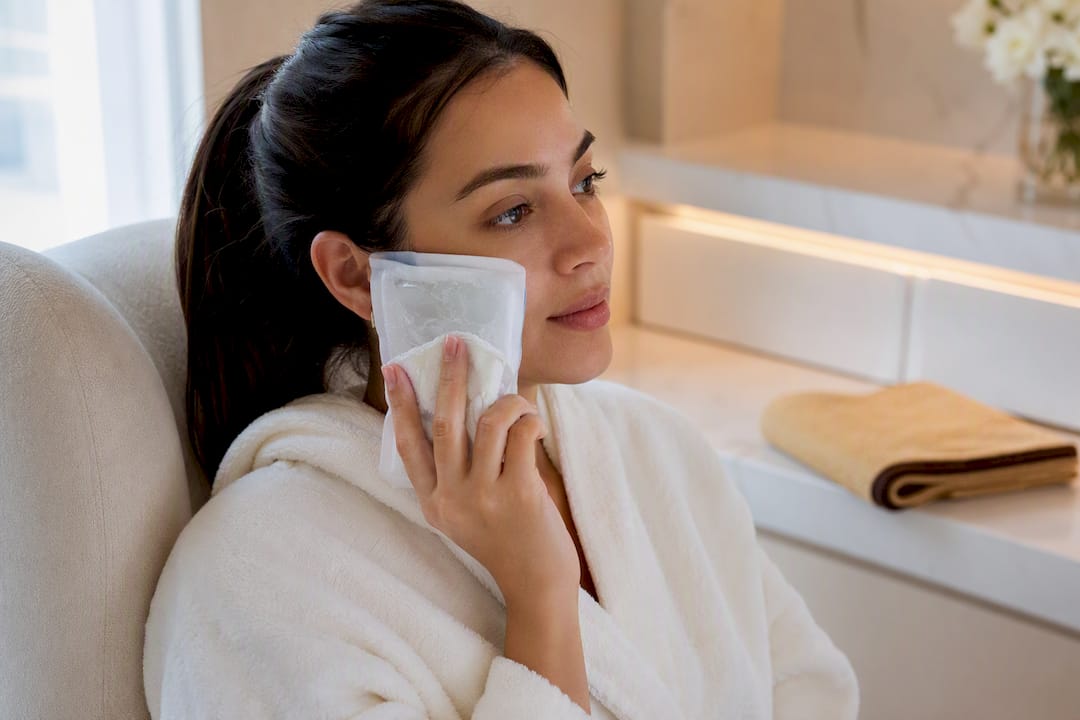
- Cool and soothe. Cool compresses can help with swelling in the first days.
The principles of looking after skin after any laser procedure are similar across types of treatment. For additional general reading on soothing and caring for skin after laser work, there is a Polish-language guide to aftercare following laser tattoo removal. Freckle aftercare differs in detail, so always follow the instructions from your own practitioner.
If freckles return, which they can with sun exposure, this is not a failed treatment. Freckles are driven by your skin's tendency to produce pigment in sunlight, so daily protection is what keeps them away.
Laser compared with other options
| Option | What it does | Points to consider |
|---|---|---|
| Pigment laser | Breaks up melanin in the freckle | Several sessions, downtime of days, needs expert skin-type assessment |
| Intense pulsed light | Broad-spectrum light absorbed by pigment | Suits some skin types better than others, so assessment matters |
| Chemical peels | Remove surface layers | Gentler, usually slower, less precise |
| Skin-health programmes | Improve tone and radiance generally | Will not remove distinct freckles, but support healthier skin |
| Daily SPF and cosmetic cover | Stop freckles darkening | Does not remove them |
If your concern is overall dullness or uneven texture rather than distinct freckles, a regenerative approach may serve you better. We offer polynucleotides, from £180 per session, and Profhilo, from £250 per session, as skin-quality treatments. Neither is a freckle remover, and we will say so plainly in your consultation.
Our perspective
We see many people who ask for freckles to be 'removed' when what they really want is a more even, luminous complexion. For some, laser is the right answer. For others, freckles are part of their natural character, and the kinder recommendation is to leave them and protect the skin.
Our approach rests on three things:
- Diagnosis first. We look at the skin, ask about the history of each mark and refer on when a mark needs a doctor's attention rather than a cosmetic treatment.
- Honest expectations. We would rather tell you that a course is needed, and that results vary, than promise a clear face after one visit.
- Suitability for your skin. Skin tone, tanning habits and your plans for the next few months decide whether it is the right moment. Sometimes the best advice is to wait until the winter.
With over 15 years of aesthetic experience, our philosophy is natural-looking results without unnecessary treatment. That applies to freckles as much as anything else.
— Ms Sandra Petraskaite
Laser treatments at NEXGEN Clinic
Our Cambridge clinic offers medically led laser treatments alongside skin boosters, dermal fillers, advanced facials and other regenerative treatments. Every treatment begins with an assessment of your skin health and your goals, and we explain what is realistic before anything is agreed.
If you are thinking about freckles or other pigmentation, book a consultation and we will advise whether laser, a different treatment or no treatment is the best step. You can also read how we work on our policies and procedures page.
How to choose a practitioner
Lasers are used in many settings, from NHS dermatology departments to beauty salons, and standards vary. Before you book, check:
- who will assess your skin and who will operate the laser, and what training they have
- whether a medical professional is involved in diagnosis and available if something goes wrong
- whether a patch test is offered for your skin type
- whether you are given written pre- and post-treatment instructions
- whether they will decline to treat you if you are tanned, which is a good sign
Be cautious of any clinic that promises permanent removal, discourages questions, or treats suspicious marks without a medical opinion.
FAQ
Can freckles be removed with laser?
Yes, laser can clear or significantly lighten freckles in many people. A 730 nm picosecond laser study reported average clearance of around 74%, but individual results vary. Most people need several sessions, and freckles can return with sun exposure.
How much does it cost to laser off a freckle?
It depends on the clinic, the device and how many freckles or how large an area you treat. We do not publish a laser price, so we give you a quote after your consultation. As a public-sector reference point, an NHS-linked laser centre lists treatment sessions from about £150 to £250 for age spots.
Is it safe to get freckles lasered off?
It is generally safe when performed by a trained practitioner after a proper assessment. Risks include temporary bruising, blistering, and darkening or lightening of the skin, which are more likely on darker skin or tanned skin. Have any new or changing mark checked by your GP or a dermatologist first.
Which laser is best to remove freckles?
There is no single best laser. Picosecond lasers at wavelengths such as 730 nm have shown good results in studies, and other pigment lasers are also used. The right choice depends on your skin tone and the type of pigment, so the practitioner's judgement matters more than the device name.
Can I have laser treatment if I have a tan?
No. Tanned skin absorbs more laser energy and raises the risk of burns and lasting pigment change. Treatment is usually postponed until the tan has faded, typically around six weeks, and you should avoid sunbeds and fake tan during the course.
Sources
- Successful Treatment of Freckles Using a 730-nm Picosecond Laser: A Prospective Study (PubMed)
- 730 nm vs 755 nm picosecond laser for freckles, split-face trial (PubMed)
- Laser treatment for pigmented marks (NHS patient information)
- Laser Treatment (Leeds Teaching Hospitals NHS Trust)
- Which laser will be used for my treatment? (Leeds Teaching Hospitals NHS Trust)
- Age spots, Bristol Laser Centre (North Bristol NHS Trust)
- Melasma (British Association of Dermatologists)
- Your Guide to Getting Rid of Freckles (Healthline)
Recommended
- Laser on Dark Skin in the UK: Why 1064 nm Needs an Expert
- Clinician Matters More Than Device: Acne Scar Laser Care
- NHS and Cochrane Evidence for Laser Treatment of Broken
- Daily Sunscreen First: UK Neck Line Treatments Compared
Ready to explore your options?
Speak with a NexGen clinician for a personalised consultation. We’ll listen, assess, and recommend the safest and most effective route — always led by evidence, always tailored to you.
Book a consultation or get in touch with our Cambridge team.